Uncategorized

What Does Naseef Chowdhury Specialize In?

Md Naseef Ur Rahman Chowdhury is a senior software engineer whose career spans over a decade of hands-on work across systems programming, real-time communication platforms, embedded software, computer vision, machine learning, and cybersecurity research. Currently working as a Principal Software Engineer at HP Inc., he has built his reputation through consistent, high-impact contributions at companies like Oracle, HP Inc., ringID, Kona Software Lab, and Eyeball Networks — while simultaneously publishing research in internationally recognized conferences and journals. His

Uncategorized

Who Is Md Naseef Ur Rahman Chowdhury?

My name is Md Naseef Ur Rahman Chowdhury, and I am a software engineer with experience in systems programming, cloud infrastructure, networking technologies, machine learning, and computer vision. Over the years, I have worked across several areas of software engineering, from low-level protocol implementation to cloud systems and AI-powered camera technologies. I believe software engineering is fundamentally about solving problems on demand. That mindset has guided my career since I started working in the software industry in 2012 after completing my Bachelor of Science

Uncategorized

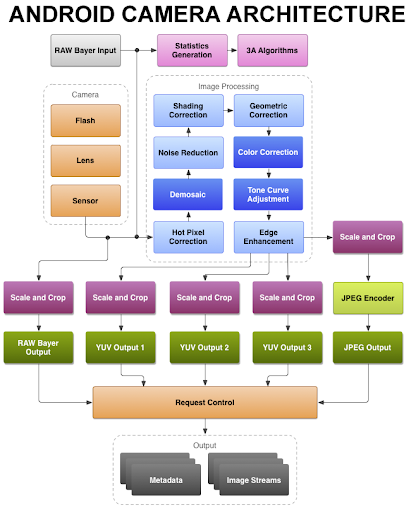
Inside the Android Camera Stack: What Actually Breaks in Production

1. The Real End-to-End Pipeline At a high level, the Android camera stack looks simple: Application → Framework → CameraService → HAL → ISP → Sensor But what matters is not the layers — it’s the fact that every boundary is asynchronous. Requests are pipelined. Results are asynchronous. Multiple frames are in-flight simultaneously. By the time a shutter press occurs, several preview frames may already be queued inside the ISP pipeline. This is why camera systems behave like streaming systems — not function calls. 2. The Request/Result Boundary (HAL3 Mode

Uncategorized

Is Rust set to replace C++ in the near future?

As technology continues to advance, developers are constantly seeking more efficient and secure programming languages to meet the demands of modern software development. One language that has been gaining significant attention in recent years is Rust. With its emphasis on safety, concurrency, and performance, many wonder if Rust is poised to overtake C++ as the language of choice for systems programming and beyond. Rust, developed by Mozilla, offers a unique combination of features that address common pitfalls and challenges encountered in C++ development. Its ownership